
Blog

Fall Cadillac Car Care: Questions Pelahatchie Owners Should Ask

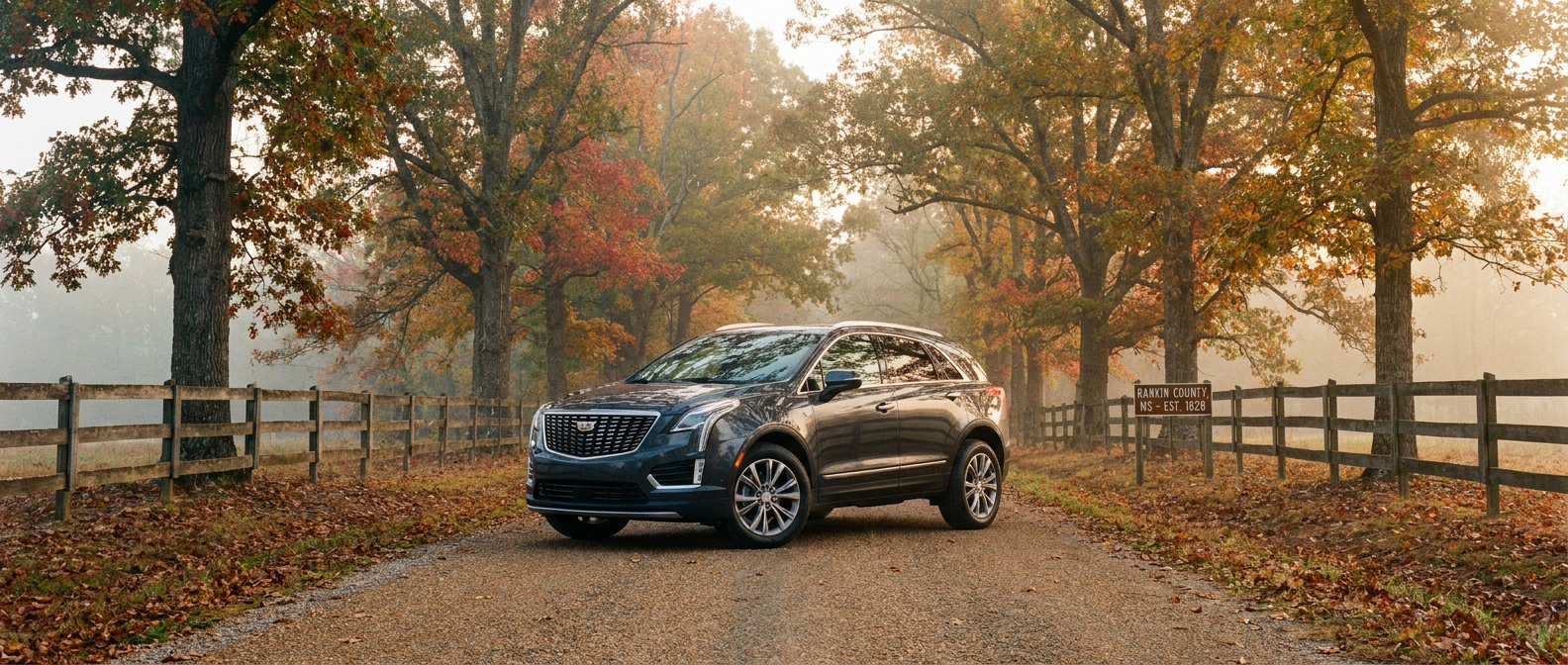
2026 Cadillac XT5 on a Rankin County Mississippi road in October morning light

Ask us what fall maintenance your Cadillac needs, and the truthful answer isn't a universal checklist. It depends on which model year sits in your driveway, and it depends on where you live. Pelahatchie in October isn't suburban Chicago. Your vehicle just came through four or five months of sustained heat, humidity, and air conditioning that ran almost without a break. The fall service question here isn't "prepare for winter." It's "assess the damage summer left behind, and catch any open recall work before the holiday travel season."

The short version
  • Mississippi fall means recovering from summer heat load, not prepping for snow. Different question, different checklist.
  • Cadillac's Oil Life Monitor calculates algorithmically and alerts within 600 miles of your next service interval; trust it, but summer heat accelerates degradation, so a check is warranted regardless of the percentage displayed.
  • Tire pressure drops roughly 1 PSI for every 10 degrees Fahrenheit of temperature change, per Cadillac's own guidance. Pelahatchie's swing from a 95-degree August afternoon to a 55-degree October morning is enough to trigger your TPMS light without any actual leak.
  • Model years 2020-2021 of the CT5 and XT5 carry the highest NHTSA recall and complaint volume; 2024 XT5 owners should confirm an airbag module recall is resolved; 2023-2025 XT5 owners should verify an instrument panel illumination recall is complete.
  • A cabin air filter that ran through a full Mississippi summer is saturated. That matters for both defrost performance this fall and air quality now.
  • Schedule your fall service visit before the Thanksgiving travel push.

Our current Cadillac XT5 inventory is one place to begin if this fall check points toward a trade, though the more useful first step is reading what your current vehicle's model year tells us about where to focus.

Which Model Years Carry the Heaviest Fall Service Priority?

Not all Cadillac model years around Pelahatchie reach fall in the same shape, and between NHTSA recall history and documented owner complaint patterns, some years ask for more deliberate attention than others, so the first move is matching your year to its risk profile. What follows is a working guide to where your model year stands.

Model Year RangeModelsSweet Spot?Documented NHTSA ConcernsFall Priority
2020CT5, XT5WatchCT5: 4 recalls, 43 complaints (powertrain, electrical); XT5: highest recall count per NHTSA (5 campaigns)Verify all recalls closed; confirm OLM reset
2021CT5, EscaladeWatchCT5: 4 recalls incl. roof rail side-curtain airbag (21V611000); Escalade: electrical/airbag campaignConfirm airbag recall remedy completed
2022-2023CT5, XT5, EscaladeModerateCT5 headlight recall (22V903000) affecting 2020-2023 CT4/CT5; XT5 rearview camera (22V709000) 2020-2021; Escalade headlight same campaignHeadlight and camera recall check
2023-2025XT5WatchInstrument panel fails to illuminate with high beams/signals active (24V459); 6,942 units affectedConfirm software remedy applied
2024XT5WatchDriver's front airbag cushion may tear during deployment (24V311000); windshield bonding (23V681000)Highest urgency: airbag and windshield recalls
2025-2026CT5, XT5, Escalade, LYRIQ, OPTIQ, VISTIQSweet SpotComplaint volumes significantly lower; 2025 CT5 shows 0 recall campaigns in NHTSA dataStandard fall service; confirm OLM status

Every recall remedy is performed free of charge by a Cadillac dealer, so the only open question is whether the work is done. A VIN check at nhtsa.gov takes under two minutes, and it tells you definitively whether your vehicle has open campaigns.

Which Model Years Should You Watch Out For?

The 2020 and 2021 CT5 carry the weight here, accounting for a combined 63 of the 94 total NHTSA complaints logged across the entire CT5 production run through 2026, per NHTSA data compiled by RecallExplained. That concentration matters. It doesn't mean those cars are fundamentally flawed (they aren't), but it does mean a Cadillac technician reading your specific VIN this fall is a more productive use of your time than a generic oil change at a quick-lube. The VIN is the tell.

Browse our CT5 inventory if a newer model year is on your radar, but check nhtsa.gov for your VIN first.

The 2024 XT5 brings two specific campaigns worth your attention. NHTSA recall 24V311000 involves the driver's front airbag cushion, which may tear during deployment rather than inflating as designed. Recall 23V681000 separately covers windshields that may not have been bonded with the proper urethane sealant. Both remedies are dealer-performed at no cost. For 2023-2025 XT5 owners, recall 24V459 covers an instrument panel that can go dark when high beams or turn signals are active (6,942 units potentially affected). A quick VIN lookup confirms whether your vehicle's software has been updated.

Our Escalade inventory reflects the current lineup. Escalade owners in the 2022-2023 range should note that NHTSA recall 22V903000 covered a lighting control module software issue affecting the exterior lighting system.

Across the CT5, XT5, and the electric lineup, the 2025 and 2026 model years show markedly lower complaint volumes, and the 2025 CT5 carries zero recall campaigns in NHTSA data as of this writing. These cars still benefit from a fall service visit, though the urgency reads differently.

Schedule Your Fall Cadillac Service Check

Pros and Cons of Addressing Fall Service in October (vs. Waiting Until December)

Pros of Acting NowCons / Trade-offs
Beat the pre-Thanksgiving service backlogPelahatchie October temps (93 degrees Fahrenheit as of mid-October) mean no cold-weather urgency yet
Cabin air filter saturated after full Mississippi summer AC seasonIf your OLM shows 40%+ life, an oil change isn't technically due
Recall work is free and appointment availability is better nowA November visit catches any additional NHTSA campaigns filed between now and then
Tire pressure check is meaningful as morning temps begin droppingTPMS alert may not appear until a cold front arrives
Battery load test catches summer heat degradation before any real coldA battery in good shape has no visible symptoms yet

The trade-off is straightforward. No mechanical emergency forces a Pelahatchie Cadillac owner into the service bay in October specifically. The case for October is scheduling clarity and thoroughness, and there's no crisis pushing it. You're mostly buying a calm appointment slot and a thorough once-over, and summer is genuinely hard on vehicle systems in this climate, so catching that wear in fall means the vehicle is sorted before holiday travel becomes a factor.

What Does Fall Actually Demand of Your Cadillac in Central Mississippi?

Fall in central Mississippi asks something different of your Cadillac than the generic checklists assume, because here the season is about recovering from a long, hot summer, and that recovery lands on four systems in particular (oil, tires, cabin filter, and battery). The generic lists miss that part.

Oil Life Monitor: what it's actually telling you. Cadillac's Oil Life Monitor doesn't run on a simple mileage clock. The system runs an algorithm that weighs driving conditions, engine load, and operating temperatures. It alerts you within 600 miles of your next service interval, according to Cadillac's published maintenance guidance. A summer of highway commutes between Pelahatchie and Ridgeland, running in high heat with the air conditioning adding engine load, will have burned through oil life faster than the same mileage in cooler months. Between 30 and 50%, you're probably fine through November, but check the date on your last service. Below 30%, schedule service now.

The TPMS light and Mississippi temperature swings. Cadillac's tire guidance puts the change at roughly 1 PSI for every 10 degrees Fahrenheit of ambient temperature shift. Pelahatchie's October runs afternoon highs in the low 90s and overnight lows that can fall into the mid-50s on a cold front. A 35-degree swing is a 3-4 PSI drop. Your TPMS light was set at a specific threshold for your trim's recommended pressure (you'll find it on the driver's door placard, not the sidewall). The light coming on at 6 a.m. after a cold front is the system doing its job. It's not a slow leak. Check pressure cold, meaning the vehicle has sat at least three hours, inflate to placard spec, and recheck.

Cabin air filter: the most overlooked Mississippi fall item. Your Cadillac ran its climate system in full cooling and dehumidification mode from May through September, and the cabin filter is the first component our Pelahatchie service lane watches load up with the dust and pollen off central Mississippi's rural roads, well before you'd notice it as weaker airflow at the vents. Independent fall-care guidance notes that a heavily loaded cabin filter restricts defrost airflow, which is the first thing you'll feel when the windows start fogging on October mornings. On the Cadillac maintenance schedule, the cabin air filter shows up at 22,500 miles and every 22,500 miles after that. In this climate, though, condition matters more than mileage. Condition beats the odometer here.

Battery: summer heat is harder on batteries than cold. Summer heat is tougher on a battery than cold, which runs counter to what a lot of Southern drivers expect. Cold weather reduces a battery's available output (a battery operating at 0 degrees Fahrenheit loses up to 60% of its starting capacity, by Cadillac's service guidance). Sustained summer heat, though, degrades the internal plates and electrolyte chemistry. A battery that's been running the climate system, seat cooling, and infotainment through a Mississippi summer rarely fails dramatically. It just gets weaker. A load test in October tells you where it actually stands.

Which Year and Trim for Which Pelahatchie Owner?

Your model year determines your fall priority, not just your mileage. Open recall work is free, and it should happen before holiday travel.

Driving a 2025 or 2026 Cadillac (XT5, CT5, LYRIQ, OPTIQ, or VISTIQ), your fall checklist is genuinely routine, covering OLM percentage, tire pressure calibration as the overnight lows start dropping, cabin filter condition, and a battery load test. The electric lineup (LYRIQ, OPTIQ, VISTIQ) adds one item. Confirm the 12-volt auxiliary battery, which powers vehicle systems independent of the high-voltage pack, is healthy. Our service team checks that as a standard item.

If you're driving a 2022-2024 Cadillac XT5 specifically, the fall visit has a non-negotiable step. Open nhtsa.gov, enter your VIN, and confirm the instrument panel (24V459) and, for 2024 models, the airbag recall (24V311000) are resolved. If not, that work comes first.

If you're in a 2020-2021 CT5 or XT5, this fall visit matters more than any other on your ownership calendar. Those years carry concentrated NHTSA complaint and recall activity. Not all of it is catastrophic, but a Cadillac-certified technician reviewing your specific vehicle's VIN against the current recall database is the right move. We do that as part of every service appointment.

If you're in an Escalade of any recent vintage, the service picture is cleaner than the sedans and crossovers. The principal 2022-2023 recall (22V903000, exterior lighting software) is a straightforward software update. Beyond that, the Escalade's fall needs mirror the XT5's, with an OLM check, tire pressure, battery load test, and cabin filter.

The I-20 corridor runs between Pelahatchie and Ridgeland. For a lot of our clients that corridor is a real commute, and if it's 30 miles each way, your annual mileage is climbing toward the filter and fluid intervals faster than you may expect. Worth knowing going into winter.

Frequently Asked Questions

What does the Cadillac Oil Life Monitor actually measure, and should I trust it in fall?

The Oil Life Monitor runs an algorithm, not a simple dipstick reading. It calculates remaining oil life from engine operating conditions, load, and temperature rather than mileage alone. Cadillac's published maintenance guidance confirms it alerts the driver within 600 miles of the next required service interval. Through a Mississippi summer, sustained high-heat operation and heavy air conditioning load consume oil life faster than the same mileage in cooler conditions. Trust the system, but if you're below 30% and traveling over the holidays, schedule service before you go.

Why does my Cadillac's TPMS light come on in fall if there's no leak?

Cadillac's tire guidance states that pressure changes approximately 1 PSI for every 10 degrees Fahrenheit of temperature shift. Central Mississippi's fall mornings can land 30-40 degrees below the afternoon highs of August and September. A 30-degree overnight drop works out to a 3-PSI pressure loss, which can bring a tire from properly inflated to below threshold without any puncture or valve issue. Check pressure cold (after the vehicle has sat for at least three hours), inflate to the placard specification on the driver's door jamb, and the light should clear.

How do I know if my Cadillac has an open recall that should be addressed this fall?

Go to nhtsa.gov and enter your 17-digit VIN in the recall lookup tool. It takes under two minutes and returns every open recall campaign against your specific vehicle. For context, the 2024 XT5 has an open airbag module recall (NHTSA 24V311000), and model years 2023-2025 of the XT5 carry a documented instrument panel illumination campaign (NHTSA 24V459) affecting nearly 7,000 units. Both are remedied free of charge by a Cadillac dealer. Any open recall work should be the first item scheduled, not the last.

Cadillac of Jackson

700 Adcock St, Ridgeland, MS 39157

(601) 948-5183


Recommended Posts

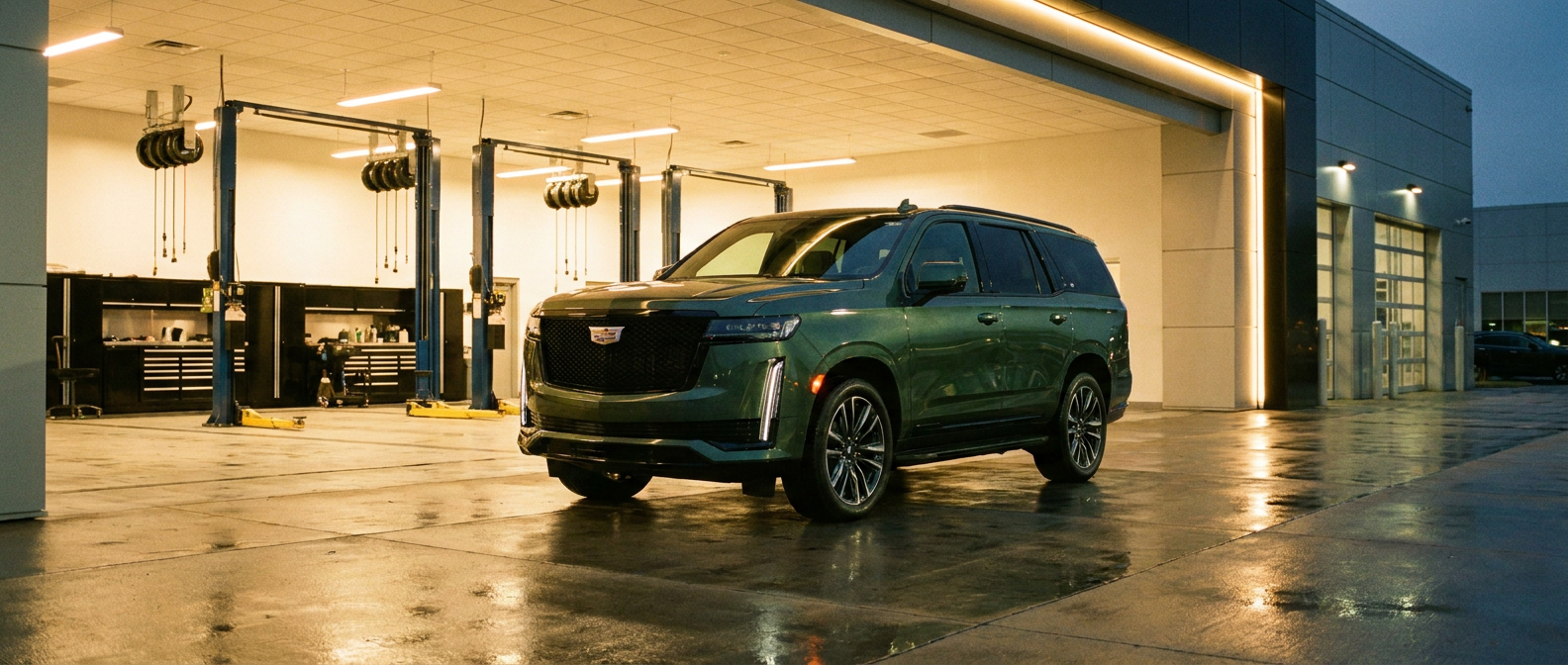
2026 Cadillac Escalade in dealership service bay at Cadillac of Jackson in Ridgeland MS before holiday travel

Schedule Cadillac Service Before the Holidays | Ridgeland, MS

In this article What's the Plan at a Glance? Why the Holiday Window Is Tighter Than You Think How the Oil Life System Actually Works, and What It Doesn't Tell You What Changes for the LYRIQ and Other Electric Models The Road You're Actually Driving The single move that protects a holiday road trip is a Cadillac service appointment finished at least two weeks before you travel. Give yourself that window. Any tighter and you're competing with every other family in the metro who also remembered at the last minute. The Escalade and the rest of the lineup are built to cover serious mileage without drama, and that engineering relies on service intervals being met on schedule rather than approximated. So you'll want a few things straight before you call us. What's the Plan at a Glance? Step What to do Best time to act Notes Book your appointment Call or schedule online 2-3 weeks before Thanksgiving week Service lanes fill in early November Pull your Oil Life percentage Check the instrument cluster display Before you call Tells us exactly where you are in the interval Note any dashboard alerts Write down any active messages Same day you check oil life Cabin air, tire pressure, brake alerts all count Confirm your transportation plan Wait, shuttle, or loaner When you book Let us coordinate timing properly Post-service reset check Verify Oil Life System resets to 100% Before you leave the lane A missed reset means a false reading on your next trip Why the Holiday Window Is Tighter Than You Think Our service lane sees a genuine compression every year in the weeks before Thanksgiving, and the compression is reliable rather than theoretical. Appointments that'd normally turn in two or three days stretch closer to a week once the whole metro's trying to get road-ready at the same moment. Two to three weeks of lead time is what gets you a same-week slot instead of a scramble. Book your appointment online now, before the first week of November. We'll give you that advice straight. Insider note: If your Oil Life percentage is anywhere below 30%, book immediately. Cadillac's Oil Life System alerts you within 600 miles of service being due, per the owner's manual, and "within 600 miles" during a Thanksgiving run to New Orleans (186 miles each way on I-55) is not a comfortable margin. How the Oil Life System Actually Works, and What It Doesn't Tell You The GM Oil Life System on every gas-powered Cadillac (the CT5, the XT5, the Escalade and Escalade ESV) does not count odometer miles, which throws people who expect a simple mileage countdown. It runs an algorithm that weighs engine temperature, RPM, trip length, and idle time to estimate how much useful life remains in the oil. Cadillac's published maintenance guidance specifies a hard 12-month cap regardless of the percentage displayed. Meaning a low-mileage vehicle driven mostly on short Madison-to-Ridgeland commutes can reach its annual limit before the display shows any concern. The short-trip effect is the piece that slips past easily. The oil ages. Short trips wear it down faster than the odometer ever suggests. Cadillac mandates a 12-month oil change maximum even if the Oil Life System percentage hasn't reached zero. Short-trip driving around the Jackson metro accelerates oil degradation faster than the odometer alone indicates. The system also doesn't flag your brake fluid condition, cabin air filter state, or tire tread depth on its own. Those have their own intervals. On a 2026 Escalade, the Cadillac owner's manual calls for a cabin air filter inspection around 22,500 miles and an evaporative control system check at 45,000. Neither appears on the instrument cluster countdown. When you come in before the holidays, our team checks the full picture, not just what the alert triggered. The system also won't reset itself. The Oil Life System must be manually reset at every service. If you've had work done elsewhere and that reset was missed, your display is reading stale data. Worth confirming with us before you leave. What Changes for the LYRIQ and Other Electric Models The LYRIQ, OPTIQ, and ESCALADE IQ carry no Oil Life System, because there's no combustion engine, so the oil-change rhythm drops out of the calendar entirely. The simplification is genuine. But no oil change does not mean no pre-trip service. Before a holiday run, an electric Cadillac benefits from a multi-point inspection that covers tire condition and inflation (range and handling both respond to pressure), brake system health (regenerative braking reduces pad wear, but the hydraulic system still needs attention), cabin air filter condition, and a software update check. Cadillac's Certified Service technicians are trained on the full electric architecture. We wouldn't hand that to a general shop that's never seen the high-voltage system. Schedule Your Pre-Holiday Service Appointment The Road You're Actually Driving A pre-trip inspection matters most here because of where we sit, and the route you pick for the holidays decides how hard the drivetrain actually works. Ridgeland sits at the I-55 and I-220 interchange. The interchange puts our buyers at the spine of every major holiday route in the metro. I-55 south carries you to New Orleans in roughly 186 miles. I-55 north runs toward Memphis. I-20 west toward Vicksburg. The Escalade family handles all of it without complaint when it's properly maintained, and it struggles when it isn't. We see a pattern on post-holiday return appointments. Vehicles that went out borderline on tires or brakes come back with a problem a pre-trip inspection would have caught. The professional class this community is made of travels often and travels far, so an inspection before that first long run is simply the more composed choice. If your Cadillac is due for service, or close enough that the holidays will push it past the annual limit, now is the time to act. Don't let the calendar make the decision. Reserve Your Service Appointment Cadillac of Jackson 700 Adcock St, Ridgeland, MS 39157 (601) 948-5183

2027 Cadillac LYRIQ charging at a public EV station in Ridgeland, Mississippi at dusk

Cadillac EV Charging and Battery Questions: Ridgeland, MS Owner Guide

The Cadillac LYRIQ carries an EPA-estimated 326 miles of range in rear-wheel drive, and that's a substantial number by any measure. Drive it through the Jackson metro in July, though, with the climate system working hard and no Level 2 charger installed at home yet, and your daily reality will sit a fair bit below that EPA figure. We wrote this for the questions buyers in Ridgeland, Madison, and Brandon actually bring to us, covering what range is realistic here, where you charge, and how you build a routine that makes ownership easy. How Far Will a Cadillac EV Really Go in Mississippi? The EPA range figures are accurate, measured under standardized conditions, and they hold up as a baseline, but what moves them in the real world here is the continuous load of air conditioning through a Mississippi summer, which runs off the same pack that turns the wheels. Count on that draw being constant. Model Drivetrain EPA-Estimated Range DC Fast Charge Rate Level 2 (19.2 kW) 2027 LYRIQ RWD Single motor 326 mi 190 kW (up to 86 mi in 10 min) Up to 50 mi/hr 2027 LYRIQ AWD Dual motor 319 mi 190 kW (up to 86 mi in 10 min) Up to 50 mi/hr 2027 OPTIQ RWD Single motor 317 mi 150 kW (up to 79 mi in 10 min) Up to 50 mi/hr 2027 OPTIQ AWD Dual motor 303 mi 150 kW Up to 50 mi/hr 2027 VISTIQ AWD Dual motor 305 mi 190 kW (up to 80 mi in 10 min) Up to 47 mi/hr 2027 ESCALADE IQ AWD Dual motor 465 mi (Cadillac-est.) 350 kW (up to 117 mi in 10 min) Up to 36 mi/hr (std.) *All range figures are EPA-estimated except the ESCALADE IQ, which carries a Cadillac-estimated range. The ESCALADE IQ is over the weight threshold for mandatory EPA fuel-economy labeling.* Air conditioning pulls continuous power from the same battery that moves the car, and in sustained summer heat that draw never lets up. A reasonable planning figure for warm-weather mixed driving is roughly 10 to 15 percent below the EPA estimate. So a 326-mile vehicle becomes a practical 275-to-290-mile vehicle on a hot August day, cabin pre-cooled from home and the AC holding comfort on the road. Still, that's plenty for any commute in this market, and it's the honest starting point for planning a run to Memphis, New Orleans, or the Gulf Coast. One thing that barely registers on range here is cold-weather battery conditioning. Mississippi winters rarely challenge lithium-ion chemistry the way northern climates do. In this state the thermal concern runs the other way, toward keeping the pack cool during long DC fast-charge sessions in August. On a car that's sat baking on our Ridgeland lot all afternoon, the first few minutes of a fast-charge session can go toward cooling the pack before acceptance climbs, and the LYRIQ and VISTIQ thermal management systems are built to handle exactly that. Where Do You Charge in the Ridgeland and Jackson Area? The charging network across the Ridgeland and Jackson area is smaller than what you'd know from a major metro, so if you've owned an EV in Atlanta or Dallas, you'll notice fewer public stations than you're used to, though planning around that reality turns it into a non-issue. Most of the work happens at home anyway. Our service team at 700 Adcock Street in Ridgeland keeps a 50 kW CCS2 charger on-site, handy for a top-up while you're in for service. For quicker public charging, Renaissance at Colony Park on Highland Colony Parkway in Ridgeland runs DC fast chargers rated to 125 kW output, two ports, open to the public. Pearl's Bass Pro Drive Tesla Supercharger (150 kW, public) sits well for drivers heading east or coming back from the coast, and it's the cleanest stop if you've got the OPTIQ or VISTIQ out on a longer run, since both carry native NACS ports and connect to Tesla Superchargers without an adapter. LYRIQ and ESCALADE IQ use a CCS1 charge port instead. A GM-approved NACS adapter opens the Tesla Supercharger network to them, though it's a separate item you'll want to confirm and keep in the vehicle before a long trip. That's the practical split in the lineup right now, and it's worth knowing before you route a Memphis weekend. Where should charging start? At home, and it's where we steer almost every buyer first. A professionally installed 19.2 kW Level 2 wall charger recovers up to 50 miles of range per hour on the LYRIQ. Plug in when you get home and by morning the battery is full, no public charger in your week at all. ESCALADE IQ owners get about 22 miles per hour from the standard 11.5 kW onboard charger; the available 19.2 kW unit raises that to about 36 miles per hour. Charging note for longer trips: DC fast charging runs most efficiently below 80 percent state of charge. The LYRIQ's thermal management system preconditions the battery on its own once you navigate to a fast charger. Turn that on before you arrive to get peak charge acceptance and trim your stop time. The OPTIQ's native NACS port and 150 kW DC fast-charge capability make it the most plug-and-go choice in the lineup for drivers who travel often and want the simplest access to the broadest charging network in the state. Home Level 2 charging eliminates most public-charger dependence for daily driving Native NACS port (OPTIQ, VISTIQ) connects to Tesla Superchargers without an adapter LYRIQ and ESCALADE IQ use CCS1; a GM-approved NACS adapter unlocks Supercharger access Renaissance at Colony Park in Ridgeland offers 125 kW public DC fast charging The Pearl Supercharger (Bass Pro Drive) is the practical fast stop for eastbound and southbound routes Plan Your Cadillac EV Ownership This Way The owners who make EV life feel effortless around here tend to follow one simple pattern, installing a home charger, setting the charge limit to 80 percent for everyday use (the battery's preferred long-term operating range), and saving 100 percent charges for the days they know they'll need the full distance. That rhythm, paired with the LYRIQ and VISTIQ range figures, covers nearly every commute and most regional travel here without a second thought. For the ESCALADE IQ, the calculus gets even more relaxed. Cadillac estimates up to 465 miles on a full charge, and the 350 kW peak DC fast-charge capability means that on the rare stop you do make, it's roughly 117 miles of range in about 10 minutes at a compatible high-power charger. Here's the honest tradeoff. Finding a 350 kW charger in Mississippi today takes planning, and the infrastructure will expand, but right now that figure matters more for Interstate travel than for a daily Ridgeland-to-downtown loop. The VISTIQ sits in a different spot. It's the three-row family hauler in the electric lineup, EPA-estimated at 305 miles with the standard 11.5 kW onboard charger, and it takes up to 190 kW at a public DC fast charger, good for about 80 miles in 10 minutes. For a family in Madison or Brandon juggling school, practice, and weekend travel, the home-charge routine handles the week. A regional trip to the Gulf Coast works fine with one planned stop. We'll say this plainly. If you're not ready to install a home charger, you'll work harder to live with a Cadillac EV in this market than an owner who has one. The public network here is functional and growing, though it still isn't as dense as what you'd find in Atlanta or Dallas. For buyers willing to make the one-time home installation, and the professional class in Ridgeland and Madison usually has what it takes to do it, the daily routine gets genuinely low-friction. Plug in, sleep, drive. Frequently Asked Questions Does Mississippi heat reduce my Cadillac EV's range? Yes, and the mechanism is worth understanding. Air conditioning draws power from the traction battery, not a separate system, so in sustained summer driving that continuous climate load trims real-world range by about 10 to 15 percent against the EPA estimate. The EPA cycle is standardized and doesn't replicate a 98-degree commute on I-55 with the cabin cooled to 68 degrees. A practical planning range for the 2027 LYRIQ RWD in warm-weather mixed driving lands around 275 to 290 miles. You can claw back some of that margin by pre-conditioning the cabin while still plugged in at home. The car cools before it disconnects from grid power, so you start the drive full and already comfortable. Should I charge my Cadillac EV to 100 percent every night? For routine daily driving, an 80 percent charge limit serves most owners well. Cadillac's battery management system recommends it for long-term capacity preservation, since lithium-ion chemistry operates most efficiently when it isn't held at full charge for long stretches. Every Cadillac EV lets you set that limit straight from the vehicle's settings menu or the myCadillac app. Reserve 100 percent charges for days when your route genuinely needs the full range. Around the Jackson metro, a partial charge covers most commutes. What connector does my Cadillac EV use, and does it work at Tesla Superchargers? The 2027 OPTIQ and 2027 VISTIQ come with a native NACS (North American Charging Standard) port that connects directly to Tesla Superchargers and the growing network of NACS-compatible public stations without an adapter. The 2027 LYRIQ and 2027 ESCALADE IQ use a CCS1 port instead, and a GM-approved NACS adapter opens Supercharger access for them. Confirm you've got it in the car before a longer trip. All four models also support Level 1 and Level 2 AC charging at home. *By the Cadillac of Jackson Team | October 2026* Schedule a Service Appointment Cadillac of Jackson 700 Adcock St, Ridgeland, MS 39157 (601) 948-5183

2026 Cadillac XT5 parked at Cadillac of Jackson dealership in Ridgeland, MS on a clear afternoon

What Cadillac Service Records Actually Tell You When Buying Pre-Owned

In this article How Do Service Records Actually Work on a Used Cadillac? Which Layer Matters Most for a Pre-Owned Cadillac Buyer in Ridgeland? Key Terms Worth Knowing Before You Walk In What This Means When You're Ready to Buy Shopping for a pre-owned Cadillac around Ridgeland, a fair first move is to ask for the CARFAX. Reasonable enough. It's also only one layer of a three-layer document, and it happens to be the least complete of the three. Knowing what each layer covers, what it quietly leaves out, and why those gaps matter in this particular climate is what separates a confident purchase from an expensive lesson you learn two summers later. The Cadillac XT5 is one of the more common pre-owned Cadillacs we see roll through our lot, and the question that tends to follow a buyer onto the lot isn't about trim levels. What a buyer really wants to know is what the paperwork actually means. A vehicle history report shows you what was reported voluntarily. A GM dealer's service-history pull shows you what was actually done at any GM facility. Physical inspection shows you what neither document captured. You need all three. How Do Service Records Actually Work on a Used Cadillac? Service records on a pre-owned Cadillac aren't a single document at all; they're three overlapping sources that frequently disagree with each other, and learning to read all three against one another is the whole skill, because any single layer on its own will leave you confident about the wrong things. Getting comfortable with each one is the point. Layer one, the vehicle history report. CARFAX and AutoCheck pull their data from state agencies, insurance carriers, and the repair facilities that opt into their reporting network. For most maintenance work, reporting is voluntary. An independent shop that changed the oil at 35,000 miles might have reported it to CARFAX automatically through its shop-management software, or it might not have. A gap in reported maintenance doesn't mean the maintenance never happened. It means the facility either skipped reporting or sat outside the network. On title events, branded titles (salvage, flood), and insurance-reported accidents, these reports are authoritative. As a complete maintenance ledger, they're unreliable. Layer two, the GM dealer service history pull. Buyers overlook this layer easily, and our team treats it as non-negotiable. Any GM-brand service department can run a VIN through the dealer service system and retrieve every authorized GM repair, recall completion, and authorized maintenance performed at any GM dealership across the network, well beyond the store you happen to be standing in. If a previous owner had their XT5 serviced at a Chevrolet dealer three states away, that work shows up here. The CARFAX may show nothing at all for the same stretch of months. The two reports cover different universes of data. Layer three, the physical inspection. The GM service history records what technicians entered. It doesn't record what they might have missed, or what a previous owner quietly deferred. A physical inspection of the wear items (brake rotor thickness, tire tread depth and wear pattern, coolant condition, cabin air filter condition) closes the documentation loop with something you can actually measure. Source What it covers well What it misses CARFAX / AutoCheck Title events, branded titles, insurance accidents Maintenance at non-reporting shops, unreported incidents GM dealer VIS history pull Authorized GM repairs, recalls, all GM-network service Private shop maintenance, work entered incorrectly Physical inspection Current wear item condition History of prior ownership behavior Which Layer Matters Most for a Pre-Owned Cadillac Buyer in Ridgeland? All three matter together, though if the Cadillac you're eyeing spent any meaningful time in central Mississippi's climate, the physical inspection carries weight that shoppers in cooler, drier markets never have to account for the same way, and the reason has everything to do with heat and the rubber it slowly cooks. Mississippi runs some of the most sustained ambient heat in the continental United States. Ridgeland and Madison regularly see days above 95 degrees Fahrenheit from June through mid-September, and the humidity amplifies everything heat does to rubber and elastomer components. Coolant hoses, HVAC evaporator cores, door seals, and suspension bushings all age differently in that environment than the same parts would in a vehicle that spent its life somewhere temperate and northern. When our team goes through a pre-owned Cadillac that's lived in this market, we look hard at coolant condition (color, consistency, and any sign of contamination), at the serpentine and accessory belts, and at how cold the HVAC blows at first startup on a hot afternoon. A car can carry a complete GM service history pull and still arrive with a heat-stressed cooling system. Both things are true at once. The records tell you what was done; the inspection tells you what the climate asked of the car between service visits. Browse our current pre-owned inventory and explore the Cadillac CT5 if you'd like to see specific vehicles where our team has already run this process before the car ever reached the floor. Schedule a Pre-Purchase Inspection Key Terms Worth Knowing Before You Walk In Term What it means in plain language VIS pull (GM Vehicle Information System) A dealer service-department report showing all GM-network authorized repairs, recall history, and service history tied to a VIN Branded title A legal designation (salvage, flood, rebuilt) that follows the vehicle permanently through state titling records Open recall A safety or compliance recall issued by the manufacturer that hasn't been completed on that specific vehicle. Ask for this specifically, as it's free to complete at any Cadillac dealer CPO (Certified Pre-Owned) A manufacturer-backed designation requiring the vehicle to pass a 172-point inspection and meet eligibility requirements. Cadillac's program requires the vehicle to be within four model years and under 50,000 miles Wear items Components expected to be replaced through normal use: brake pads and rotors, tires, filters, belts, wiper blades What This Means When You're Ready to Buy We'll be direct about this one. A pre-owned Cadillac bought without the GM service history pull is a car you're buying on partial information, and while the CARFAX earns its place in the folder, it simply can't stand in for the dealer pull that documents the GM-network side of the story. The CARFAX is useful, but it won't do the job alone. Ask any Cadillac or GM service department to run the VIN before you sign. That request costs you nothing and hands you the one document CARFAX genuinely can't replicate. The honest tradeoff on Certified Pre-Owned runs like this. Cadillac's CPO program adds the 172-point inspection and holds vehicles to eligibility requirements (within four model years, under 50,000 miles at the time of certification), which means plenty of well-kept pre-owned Cadillacs with higher mileage or a longer service history simply won't qualify, and that says nothing about their condition. Some of the most mechanically sound used cars on a lot just miss the CPO window. A thorough inspection of a non-CPO car with a clean GM service history pull can tell you more than a CPO badge sitting on a vehicle with thin documentation. Before any pre-owned vehicle reaches the floor at Cadillac of Jackson, our team runs the VIS, reviews the vehicle history report, and puts the car through our own multi-point inspection. Our service department handles the cars we sell the same way it handles the ones our existing customers bring in for scheduled maintenance, the same technicians, the same standards. You can schedule service for any pre-owned Cadillac you've already bought, or one you're still weighing, and we'll walk through the inspection results with you. Frequently Asked Questions Can a Cadillac dealer pull service records for a vehicle that was serviced somewhere else? Yes, with one important distinction. Any GM dealer's service department can access the GM-network service history for a vehicle through its VIN, which captures authorized GM repairs, recall completions, and maintenance performed at any GM-affiliated dealership (Cadillac, Chevrolet, Buick, GMC). Work done at independent shops, non-GM dealers, or quick-lube places outside the GM network won't show up in that system. CARFAX may or may not capture it separately, depending on whether that shop reports to CARFAX voluntarily. A clean GM service history pull and a separate CARFAX are both worth requesting, not just one of them. Is a Cadillac CPO vehicle always a better choice than a regular pre-owned? Not automatically. Cadillac's CPO program requires vehicles to be within four model years and have fewer than 50,000 miles to qualify. A vehicle outside that window (say, a six-year-old Escalade with 60,000 documented miles and a clean GM service history) wears no CPO badge yet can carry strong documented history. The inspection and the records matter more than the certification label by itself. For a car that qualifies, the CPO designation brings manufacturer-backed program benefits. For one that misses on age or mileage alone, a thorough independent review of the documentation and the vehicle's physical condition is the functional equivalent. Explore Financing Options Cadillac of Jackson 700 Adcock St, Ridgeland, MS 39157 (601) 948-5183