Blog

The 2027 Cadillac Escalade Technology Suite: What to Explore Before Your Next Family Trip

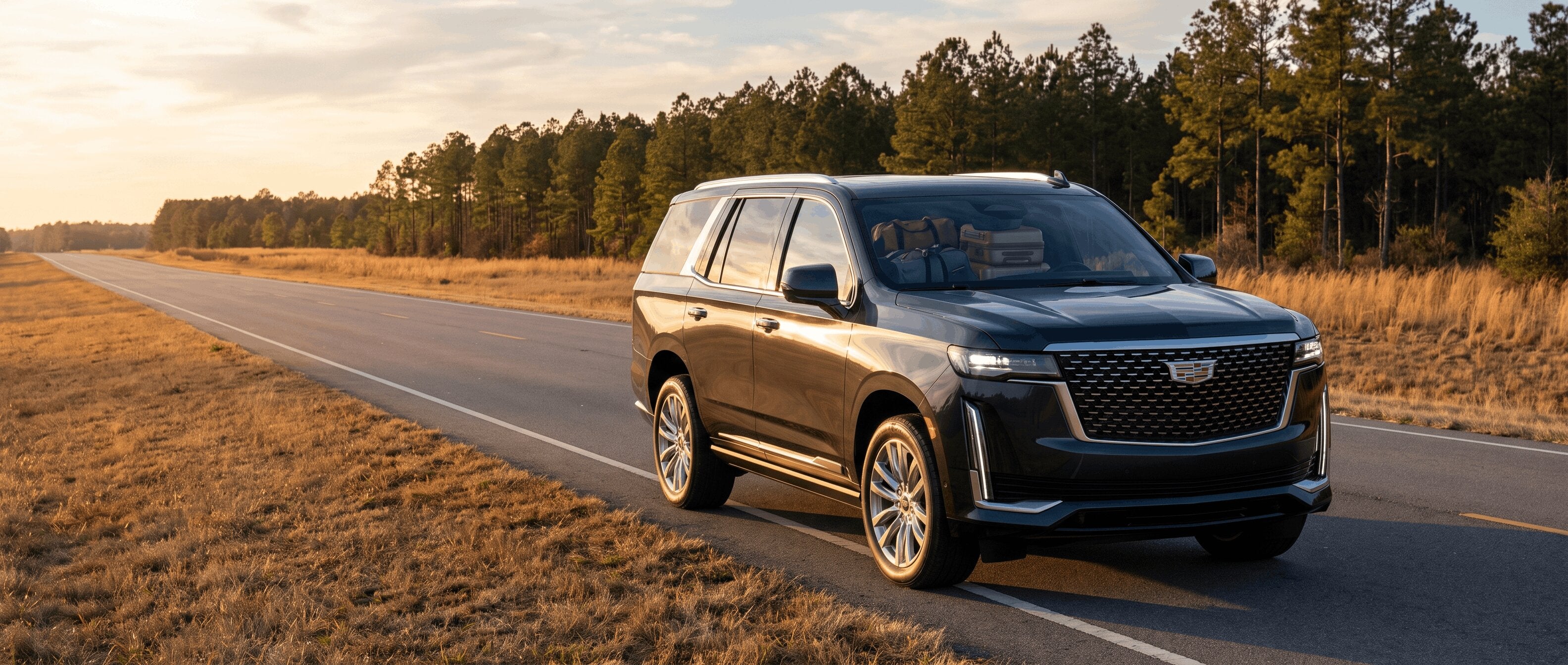
2027 Cadillac Escalade on a Mississippi highway ready for a family road trip near Ridgeland

Before anyone touches the seat adjustment or argues over the radio, there's a moment on a Mississippi highway when the Escalade simply takes over. Picture I-55 north out of Ridgeland, midday in October, the kind of flat-open stretch where the road does exactly what you expect for the next eighty miles. Those are the conditions this vehicle's technology was engineered for, and plenty of what's on board goes unnoticed until a family is already two hours down the road.

The 2027 Cadillac Escalade's technology suite is built around three things that matter on a long family trip. There's the 55-inch curved OLED Horizon Display that puts navigation and passenger controls in one unified surface, Super Cruise hands-free driver assistance for compatible highway miles, and an available rear seat entertainment system with dual 12.6-inch touchscreens that runs independently of the front cabin.

Consider that the short version. The longer one matters because each of those systems has a behavior you'll want to understand before you leave the driveway.

Browse the 2027 Escalade on our lot

Why Does the Escalade Fit a Family Road Trip Out of the Jackson Metro?

Mississippi summers stretch deep into fall, and the I-55 corridor from Ridgeland up through Madison runs hot and bright for the better part of the year, which means the cabin environment and the driver's cognitive load both need active management on a long run. The Escalade handles both at once, through a technology stack that's integrated rather than bolted on.

Local Condition or Family NeedThe Feature That Handles ItWhy It Matters Here
Long I-55 highway miles with steady, low-demand drivingSuper Cruise hands-free driver assistanceRemoves the low-level fatigue of holding lane and speed for extended interstate segments
Mississippi heat, high UV exposure through glassTri-zone automatic climate control with ventilated front seatsThree independently controlled zones; front seats ventilate, not just cool the air
Kids needing entertainment independently of the driverAvailable rear seat entertainment with dual 12.6-inch touchscreensEach screen runs content independently; HDMI input connects external devices
Navigating unfamiliar destinations mid-trip55-inch Horizon Display with augmented reality navigationAR overlays turn-direction cues onto a real-world forward camera view
Connectivity for multiple devices across three rowsBuilt-in 5G Wi-Fi hotspot, wireless charging, multiple USB portsTwo USB ports per row; front wireless charging pad; hotspot connects multiple devices simultaneously
Night arrival or low-light suburban drivingAvailable Night Vision thermal imagingDetects pedestrians and animals beyond headlamp range

The table lays out the structural argument. What follows are the features worth a closer look before you've committed to a longer run.

Super Cruise: What It Actually Does on I-55

Hands-free highway driving gets talked up and misread about equally, which is why it helps to start with what Super Cruise actually is, a driver assistance technology that comes standard on every 2027 Escalade trim and handles steering, acceleration, and braking on compatible highway segments. Super Cruise is not autonomous driving. A driver attention system, a camera on the steering column watching your eyes, confirms you're engaged and ready to respond. It still needs you.

Cadillac's Super Cruise compatible road network covers over 200,000 miles of mapped highway across the United States and Canada, and I-55 through Mississippi sits inside that network. On a run from Ridgeland to, say, Memphis or south to New Orleans, the Escalade holds the lane and speed on the mapped segments without constant physical input from the driver. Fatigue on a five-hour drive with three children in the cabin is real, and you'll feel the benefit of shedding that physical workload during the monotonous interstate miles.

See the long-wheelbase Escalade ESV if third-row space is the priority

Super Cruise works on mapped, divided highways and nowhere else. It won't run on city surface streets, off-ramp transitions, or rural two-lane roads. Approach a construction zone or an unmapped segment and the system asks you to take over with enough time to respond comfortably. Better to know that now than mid-trip.

For families planning long regional runs, the Escalade trims worth a first look tend to be the Luxury and Platinum Luxury. The Luxury trim carries ventilated front seats, the panoramic SkyGlass roof, and Super Cruise as standard. The Platinum Luxury adds the 38-speaker AKG Studio Reference audio system and the available rear seat entertainment system with dual 12.6-inch displays, and that's the piece that changes the back-seat experience meaningfully on a four-plus-hour run.

The 55-Inch Display: More Than a Screen

Calling it a big infotainment screen undersells the engineering, because the 2027 Escalade's 55-inch curved OLED surface spans the full dash from pillar to pillar and folds the driver's gauge cluster and the front passenger's infotainment display into a single curved unit. The driver's section runs at 8K resolution. The front passenger's screen operates independently, so a co-pilot can run navigation on one portion while music and phone controls sit on another, and they're not interrupting each other. Two jobs, one surface.

Google Built-in sits native to the system, so Google Maps, Google Gemini voice assistance, and Google Play run straight through the vehicle and don't need a phone connection. Wireless Apple CarPlay and Android Auto both come standard for drivers who'd rather use their own app ecosystem.

All three work, and the system switches between them cleanly, so the Escalade doesn't force the choice on you.

View current Escalade inventory at Cadillac of Jackson

Augmented reality navigation earns a specific mention here. When you're navigating an unfamiliar area, the AR system overlays your next-turn instruction onto a live forward camera feed in the driver's display. Instead of reading a schematic map at an interchange, you see your actual upcoming road with the route cue drawn over it. On a trip to somewhere new, or through an unfamiliar city after dark, that difference earns its keep.

  • 55-inch curved OLED display, standard across all 2027 Escalade trims
  • Driver's display renders at 8K resolution; front passenger screen operates independently
  • Google Built-in native (Google Maps, Gemini, Google Play) plus wireless Apple CarPlay and Android Auto
  • Augmented reality navigation overlays turn cues onto a live forward camera view
  • Available rear seat entertainment adds dual 12.6-inch independent touchscreens with HDMI input

The Back Seat Is the Other Cabin

The second and third rows of the Escalade carry enough space and enough available technology to work as a separate environment from the front cabin, and that capability is the part families tend to discover a little late, usually once a long trip is already underway. Whether it matters at all depends on the kind of trip you're taking and who's riding in the back.

Tri-zone automatic climate control comes standard on all 2027 Escalade trims, so the driver, front passenger, and rear passengers each get their own temperature settings. The rear zone isn't an afterthought. On a Mississippi October afternoon, with the sun still coming through the rear glass and the back-seat temperature reading differently from the front, independent rear control (actual control, not a pass-through vent) is the difference between a comfortable third row and a restless one.

The available rear seat entertainment system mounts dual 12.6-inch touchscreens on the backs of the front seats. Each screen works on its own, takes HDMI input for external devices, and connects over Bluetooth. The system also links to the myCadillac app, so the front cabin can manage content from the driver's seat without anyone reaching back. Two passengers can watch completely different content. They don't have to agree on a thing.

Explore the all-electric ESCALADE IQ if you're considering the EV version

One tradeoff deserves naming plainly. The rear seat entertainment system is available, not standard, on the Luxury trim. It comes standard on the Platinum Luxury and Platinum Sport. If rear screens are a firm requirement for your household, confirm the trim before you configure. Our team can walk you through where each feature lands in the current lineup so there aren't any surprises.

Schedule a Pre-Trip Service Check

Setting It Up Before You Leave Ridgeland

The driver profile system is the piece that gets skipped most in a hurried pre-departure, and it's worth a couple of minutes, because the 2027 Escalade stores memory settings for driver seat position, mirror positions, steering column, and display preferences. On a trip with a second driver (a co-driver of a different height, with different mirror preferences), swapping profiles on the fly through the Horizon Display takes a few taps instead of a manual readjustment of every surface.

The 5G Wi-Fi hotspot is worth confirming before you've pulled out, not an hour into the trip. It connects multiple devices simultaneously across all three rows, so a family running tablets in the back and phones up front gets one connection for the whole cabin. The wireless charging pad at the front console handles one phone at a time, and the additional USB ports across all three rows handle the rest.

HD Surround Vision comes standard on all 2027 Escalade trims, stitching camera feeds into a top-down overhead view of the vehicle and its immediate surroundings. Handy for parking at a hotel, threading a crowded festival lot, or lining up a trailer for the trip. It doesn't announce itself, and it's the kind of feature our team notices customers mention after a first longer trip.

Prepare the technology the way you'd prepare the vehicle itself. Confirm the driver profile is saved. Activate the Wi-Fi. Check that the rear screen preferences are set for the drive length you're covering. The Escalade has the capability, and it takes about five minutes at the driveway to get it all working in your favor. Five minutes, before I-55 appears.
Cadillac of Jackson

700 Adcock St, Ridgeland, MS 39157

(601) 948-5183

Recommended Posts

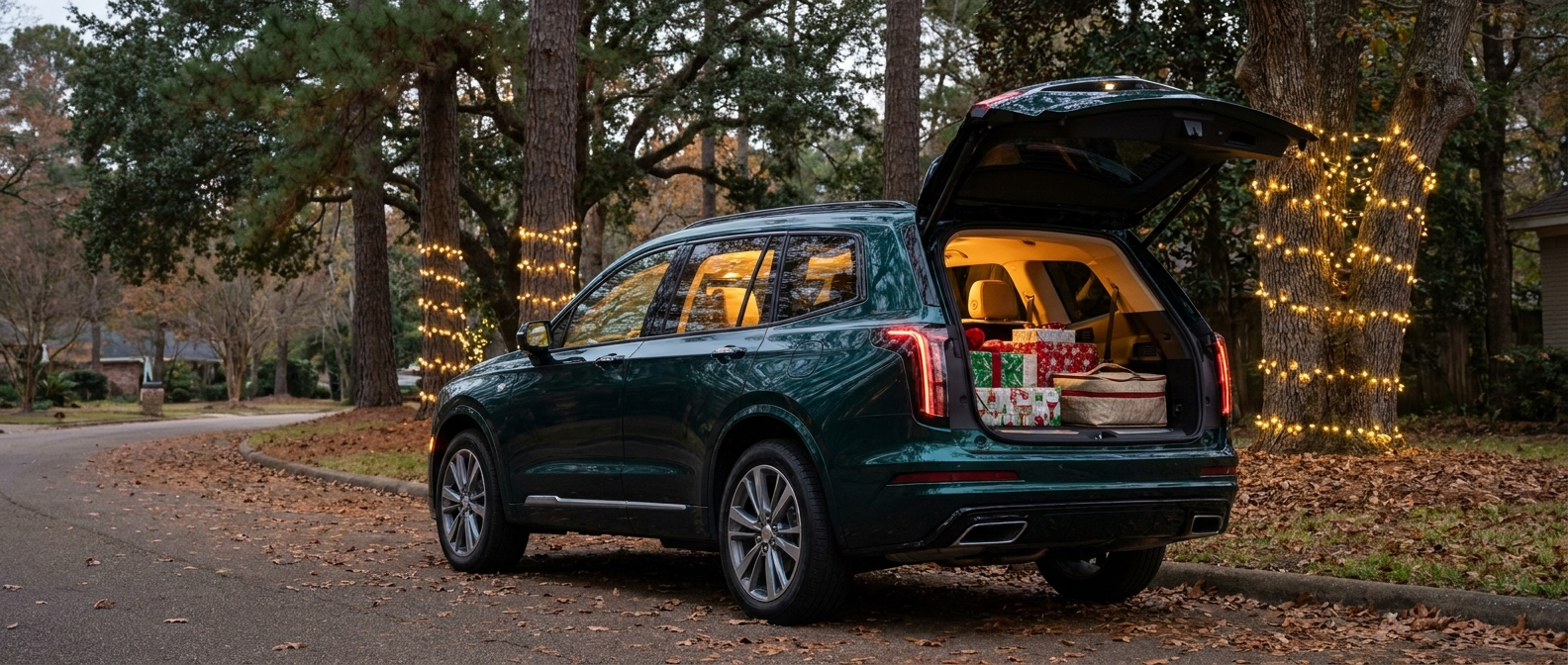
2025 Cadillac XT6 liftgate open with holiday cargo loaded on a residential street in Ridgeland, MS

XT6 Holiday Seating and Cargo Checklist for Madison Gatherings

The 2025 XT6 closes out this generation for North America, so the examples on our lot right now are the most sorted version of a three-row Cadillac that seats seven, folds down to 78.7 cubic feet of cargo, and still feels composed on a December evening run up Highland Colony Parkway to the Ridgeland Christmas Tree Lighting. Work this checklist, and you'll load it correctly, seat everyone comfortably, and skip the trunk-rearrangement moment in a neighbor's driveway. See our available Cadillac VISTIQ inventory if you're also weighing the all-electric three-row that follows the XT6 in the lineup. What Goes on the Holiday Checklist? Run through these items before every gathering trip from Thanksgiving through New Year's, since seating, cargo staging, cabin comfort, and a clean exit each come down to a handful of decisions you make before the first bag goes in, and the XT6 rewards that bit of planning more than most three-rows do. Seating configuration [ ] Confirm your headcount. Seven passengers? Keep the second-row bench. Six? The available captain's chairs add pass-through access to the third row and a more composed second-row experience. Useful when the ride to the Madison Christmas Parade on Old Canton Road includes both adults and school-aged kids. [ ] Assign the third row intentionally. Cadillac lists 29.5 inches of legroom back there. That seats two children comfortably and two smaller adults on a short run. For a cross-town drive to Thanksgiving dinner it works fine. For the full I-55 trip up to grandparents' house, plan to rotate adults through the middle row every hour. [ ] Confirm second-row headroom before the seatback positions are locked in. The 2025 XT6 gives 39.1 inches of headroom in row two. Put your tall passengers there; row three gives 37.2 inches. [ ] Check that the 60/40 split-folding second-row bench is fully latched if you're in seven-passenger configuration. A partially folded seatback is the one interior detail that shifts cargo mid-trip. Cargo staging [ ] Match your cargo plan to the actual configuration. With all three rows occupied, you have 12.6 cubic feet behind the third row. That covers a carry-on, a small cooler, and a gift bag or two. A full Thanksgiving haul is out. [ ] Fold the third row flat to unlock 43.1 cubic feet, the figure for a family of five with a holiday grocery run or a stack of wrapped gifts, still with five comfortable seats in use. [ ] Need full capacity? Both rear rows down gives you 78.7 cubic feet, the floor of an XT6 with everything stowed. At that point it's a cargo vehicle, and two adults ride up front. [ ] Place fragile items (the casserole dish, the fruitcake nobody asked for) on the floor rather than a folded seatback. The XT6's flat fold gives you a genuine load floor instead of a tilted shelf. [ ] Bring a trunk organizer or a low-profile cargo bin. It keeps the 12.6-cubic-foot space usable as a contained zone instead of a shifting pile. Cabin comfort before the drive [ ] Set tri-zone climate control before passengers board. Mississippi Novembers run mild to cool, but the rear zones need a head start, particularly for young passengers who don't have direct vents. [ ] Activate heated second-row seats for outboard passengers on the bench. Figure a 20-minute drive from our lot on Adcock Street to most Madison addresses; the cabin warms quickly, and seat heat closes the gap immediately. [ ] Confirm phone connectivity for navigation and music before departure. The XT6 runs wireless Apple CarPlay and wireless Android Auto. No cable required, but the phone still needs to be in Bluetooth range on first connection. Load security and exit [ ] Use the hands-free liftgate if your arms are full. Hands-free is standard on the Premium Luxury and Sport trims. Know which trim you have before you're standing in a parking lot with a 9x13 pan. [ ] Confirm cargo load balance side-to-side. An off-center load barely registers in a vehicle this size. On the interstate it shows. Why These Items Matter: The Space Math Behind the Season The utility story on the XT6 comes down to one plain tension, since seven occupied seats and a meaningful holiday haul cannot coexist in the same trip, and with all three rows full Cadillac's published figure is 12.6 cubic feet behind them, roughly the volume of a carry-on bag and a soft cooler. That's the trade, and we're straightforward about it in our showroom. Compare the two-row XT5 if your household regularly runs five passengers and prioritizes cargo over the third seat. The workaround the XT6 handles cleanly is the third row, which folds flat in seconds and lifts the available volume to 43.1 cubic feet, a meaningful figure for a family of five carrying the full holiday supply run. One thing worth doing, in that order, is dropping the third row before you load, because reaching the release with bags already stacked turns into a two-handed job in a tight driveway. What we see on the lot, working through configurations with Madison-area families, is that the bench-versus-captain's-chairs call matters more than the cargo question. The bench carries seven and keeps the setup simple. The captain's chairs seat six, add a natural aisle to the third row, and make the second-row ride noticeably more composed. Bring two rows of adults and two kids in the back, and the captain's chairs earn their keep. View our current XT6 inventory On the third row and adult passengers: Cadillac's published third-row legroom of 29.5 inches leads its direct segment peers, a real number rather than marketing language. It won't make every adult comfortable for 90 minutes. It does mean two adults of average build can ride back there for a 20-minute cross-town drive without complaint. Know your route. Item Why It Matters for Holiday Trips Second-row bench (7-seat) vs. captain's chairs (6-seat) Bench maximizes headcount; chairs ease third-row boarding and second-row comfort 12.6 cu ft (all rows up) Fits a carry-on, small cooler, and gift bags, not a full Thanksgiving haul 43.1 cu ft (third row folded) Handles a family of five plus a full holiday grocery or gift run 78.7 cu ft (both rows folded) Full cargo mode; the largest load floor in this vehicle Tri-zone climate control Rear-row passengers control their own temperature independently of front 60/40 split-folding second row Lets one side fold for cargo while one side keeps a passenger Hands-free liftgate (Premium Luxury, Sport) Critical when both arms are carrying food or gifts Wireless Apple CarPlay and Android Auto Navigation and music without a cable on a busy holiday evening Explore Financing Options Your Print-and-Go Recap Before Every Holiday Run Check your headcount before you touch the liftgate, because every holiday run starts with the same choice between people and cargo, and getting the configuration right the first time saves you the parking-lot reshuffle at the far end. Count your passengers first. Seven people means 12.6 cubic feet of trunk. Five people means you can fold the third row and use 43.1 cubic feet. The number changes what you can bring. Assign the third row to children or shorter adults for longer drives. For the drive across Madison to the Festival of Trees at Madison Square Center for the Arts on Main Street, it's fine for anyone. For an hour on the interstate, honest planning matters. Stage fragile cargo on the XT6's flat load floor rather than folded seatbacks. The fold gives you a genuine flat surface. Use it. Activate climate zones and seat heat before the first passenger boards. November in central Mississippi is mild enough that the cabin warms in minutes, but the first few minutes matter when you're loading a full vehicle. Connect your phone before you close the door. Wireless CarPlay and Android Auto sync quickly, but don't attempt first connection while navigating Old Town Ridgeland during the Christmas Parade on December 4. Know your liftgate. Hands-free is on Premium Luxury and Sport. If you're on a Luxury trim, the liftgate is power-operated but button-activated. Build in the extra five minutes. Parking at Northpark in Ridgeland during December fills faster than any other month. Leave before you think you need to. Schedule a pre-holiday service check to confirm tires, fluids, and lighting before the busy stretch begins. Frequently Asked Questions Can the 2025 Cadillac XT6 comfortably fit seven adults for a holiday gathering? It can transport seven adults for shorter cross-town trips. Cadillac's published third-row legroom is 29.5 inches, which leads the segment, and third-row headroom is 37.2 inches. For a 20-minute drive to a gathering in Madison or Ridgeland, two adults in the back row are comfortable. For a longer interstate trip, we'd recommend rotating adults through the second row (39.1 inches of legroom) periodically, or using the captain's chairs configuration to give second-row passengers more personal space while keeping two spots in the third row for smaller adults or children. How much holiday cargo can the XT6 carry if all seven seats are occupied? With all three rows in use, Cadillac's published cargo volume is 12.6 cubic feet behind the third row. That accommodates a weekend bag, a soft cooler, and a few gifts. Enough for a day trip, not a full holiday haul. Folding the third row flat (which the 60/40 split seatback enables on one side) expands the space to 43.1 cubic feet. With both rear rows folded, the XT6 opens up to 78.7 cubic feet of load floor. The practical guidance for holiday use is simple. Decide whether you're carrying seven people or you're carrying significant cargo, and configure accordingly before you load the first item. Schedule Your Pre-Holiday Service Check Cadillac of Jackson 700 Adcock St, Ridgeland, MS 39157 (601) 948-5183

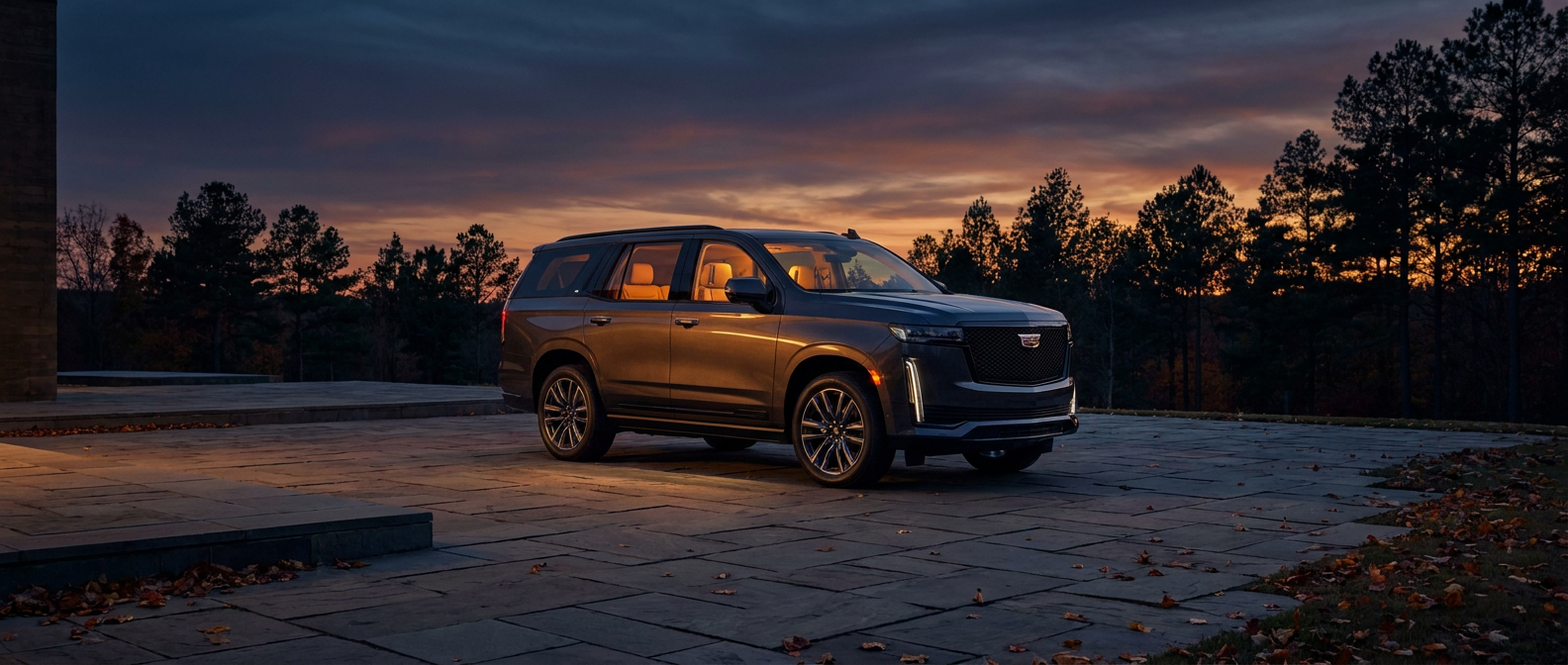
2027 Cadillac Escalade at Cadillac of Jackson showroom forecourt at dusk, Ridgeland MS

Year-End Cadillac Myths Debunked: How to Shop Cadillac of Jackson in November

Car-buying folklore never quite dies, and one piece of it keeps circulating. Hold out until the last day of the year, the story goes, and the dealership will cave. For some high-volume mainstream brands with enormous lot inventory, that logic has modest grounding. For Cadillac in November 2026, it doesn't hold. Consider what's actually true. November 2026 is the most compressed and consequential year-end in Cadillac's recent history. The 2026 CT4 is in its final model year, production already stopped in June, and no successor is planned. The 2026 CT5 is the last of its generation before a redesigned ICE sedan arrives, by Cadillac's own confirmation, no earlier than a future model year still unconfirmed at time of publication. Meanwhile, 2027 Escalade, Escalade IQ, LYRIQ, OPTIQ, and VISTIQ models are already on our lot. Waiting six weeks won't create a better situation. It may leave you choosing from what's left after others have acted. The short version Myth: December 31st is the magic date. Reality: year-end incentive windows open now, and selection narrows as the month progresses. Myth: A 2026 Cadillac is a bad buy if 2027 models exist. Reality: it depends entirely on how long you plan to own it, and two 2026 models in our lineup have no 2027 successor on the horizon. Myth: Your trade-in is worth the same in January. Reality: trade-in values historically soften after the new year once December's high trade volume floods dealer lots. Myth: Waiting longer means more negotiating leverage. Reality: for genuinely scarce units (the CT4, specific CT5 trims), leverage flows toward whoever acts when inventory exists. Myth: Year-end shopping is only about price. Reality: it's also about locking in a specific configuration before it's gone. Are the Year-End Myths About Cadillac Actually True? The Claim What's Actually True "Wait until December 31st for the best deal" Year-end manufacturer incentive programs are active throughout November and December. December 31st is not a magic threshold. Per established market patterns, selection narrows as late December approaches. "A 2026 Cadillac is inferior to a 2027" The 2027 Escalade, Escalade IQ, LYRIQ, OPTIQ, and VISTIQ are current and on our lot. But the 2026 CT4 and 2026 CT5 are genuinely final-generation models with no immediate replacements, making the 2026 designation a historical fact, not a drawback. "Your trade-in value holds steady through January" Trade-in market conditions typically soften in January as dealerships absorb the high volume of December trades. Acting before that influx shifts conditions in your favor. "Dealers are desperate and will accept any offer" Genuine incentive alignment exists in year-end windows. Urgency tactics and manufactured pressure do not. We've seen that high-demand configurations, particularly in the electric lineup, hold value regardless of the calendar. "It's smarter to wait for the redesigned CT5" Cadillac has confirmed a next-generation ICE CT5 is in development, with no confirmed production start date at time of publication. The 2026 CT5 is what's available now. "EV deals are always better in December" Range and configuration matter more than calendar timing for an electric Cadillac. The 2027 Escalade IQ carries a Cadillac-estimated 465 miles of range. That specification doesn't become more useful by waiting. What the Model-Year Reality Actually Looks Like on Our Lot The model-year reality on our lot splits into two clear stories, and it matters most to the Jackson metro buyer who's been monitoring the lineup for months rather than treating this as an abstract question about which year sits on the badge. Some models are current and freshly refreshed. Others are the last of their kind. Start with the 2026 CT4, the last of its kind. Cadillac confirmed production ended in June 2026, with no successor nameplate planned. If a rear-wheel-drive compact sport sedan at this scale is what you want from Cadillac, the inventory on our lot is what exists. Period. The CT4-V Blackwing (twin-turbocharged 3.6-liter V6, 472 hp) will be the last manual-transmission Cadillac performance sedan of this configuration. We don't say that to sell anything; the production calendar simply recorded it. The 2026 CT5 carries a 2.0L twin-scroll turbocharged I4 producing 237 hp and 258 lb-ft of torque, with RWD achieving 0-to-60 in 6.6 seconds per Cadillac's figures. Those are the current-generation numbers. The next-generation CT5 (a confirmed ICE redesign) has no official production start date confirmed at time of publication, meaning dealership arrivals remain an unconfirmed future-model-year story. For someone who wants a Cadillac sport sedan in their driveway before the holidays, the 2026 is not the compromise. It is the vehicle. For the electric lineup, the picture is different. Both the 2027 LYRIQ and 2027 OPTIQ are current-model-year vehicles, fully refreshed and on the lot. In RWD form the 2027 LYRIQ carries an EPA-estimated 326 miles of range, with Super Cruise hands-free driver assistance standard on every trim. On a cold North Mississippi morning you'll see the estimated range read lower until the battery warms, which is physics and not the calendar. The 2027 Escalade IQ and Escalade IQL carry Cadillac-estimated ranges of 465 and 460 miles respectively. Those numbers don't fluctuate with the calendar. Explore Financing Options The 2026 CT4 is the final model year of Cadillac's compact sport sedan, with production already ended and no replacement planned. If that vehicle is on your list, now is the only window that exists. The 2026 CT4 and CT5 are both final-generation models in the current form, though for different reasons: the CT4 is discontinued outright; the CT5 continues in a next generation that won't arrive at dealerships for an as-yet-unconfirmed future model year The 2027 Escalade, Escalade ESV, LYRIQ, OPTIQ, VISTIQ, Escalade IQ, and Escalade IQL are current-model-year vehicles on our lot now The 2027 Escalade IQ and Escalade IQL carry the same Cadillac-estimated ranges (465 and 460 miles) as when they launched Trade-in appraisal conditions are more favorable now than they will be once January's trade volume settles in Configuration availability narrows in late December as other buyers act So What Should You Actually Do Before Year-End? What you should actually do depends on which Cadillac you're after, and none of it requires urgency theater. For a current 2027 model the smart move is to shop deliberately. For a final-year 2026 sedan the smart move is simply to act while the inventory exists. If a current-generation 2027 Escalade or Escalade ESV, or one of the electric models is your direction, the best move is to visit the showroom now, work through what trim and configuration genuinely fits your life, and understand what your current vehicle is actually worth at this moment in the trade cycle. The trade-in appraisal process takes a few minutes and gives you a concrete number, not a range. If a 2026 CT4 or CT5 is on your radar, the conversation is simpler. Act on the inventory that exists. We're not manufacturing scarcity; we're describing what Cadillac's production calendar produced. One tradeoff deserves plain language. A 2026 badge will read a year older at resale, and there's no way around that. Buying a 2026 model in late 2026 means you'll own a 2026 vehicle at trade-in time, regardless of when you bought it. If your ownership horizon is three to four years, that model-year gap versus a 2027 is a real consideration. If you plan to keep it eight years or longer, that gap narrows to nearly nothing, and the configuration you have today is the more relevant factor. Work that question through with our team, and we'd rather give you the honest analysis than a talking point. Year-end shopping works best when you come in knowing your model, your configuration preferences, and your trade-in situation. We'll handle the rest with the precision this purchase deserves. Frequently Asked Questions Is it actually better to buy a Cadillac at the end of the year? Year-end can be a genuinely favorable window for Cadillac shoppers, though the advantage isn't a December 31st magic threshold. Instead, the advantage comes from several things combining. Manufacturer incentive programs run throughout November and December, end-of-quarter alignment closes Q4 in December, and the particular 2026 situation puts two Cadillac sedan models in their final configurations. In practical terms, visit sooner rather than later in the window, while configuration selection is at its broadest. Should I wait for the new CT5 instead of buying the 2026? Cadillac has confirmed a next-generation internal combustion CT5 is in development, with no official production start date announced at time of publication. So dealership arrivals remain a future-model-year story with no confirmed timeline. If a Cadillac sport sedan is what you want in the near term, the 2026 CT5 is the available vehicle. It carries a 2.0L twin-scroll turbocharged I4 producing 237 hp and 258 lb-ft of torque, with the full 33-inch Horizon Display, Super Cruise, and ventilated front seating standard on the Premium Luxury trim. Waiting does not create a nearer alternative. Get Your Trade-In Appraised Cadillac of Jackson 700 Adcock St, Ridgeland, MS 39157 (601) 948-5183

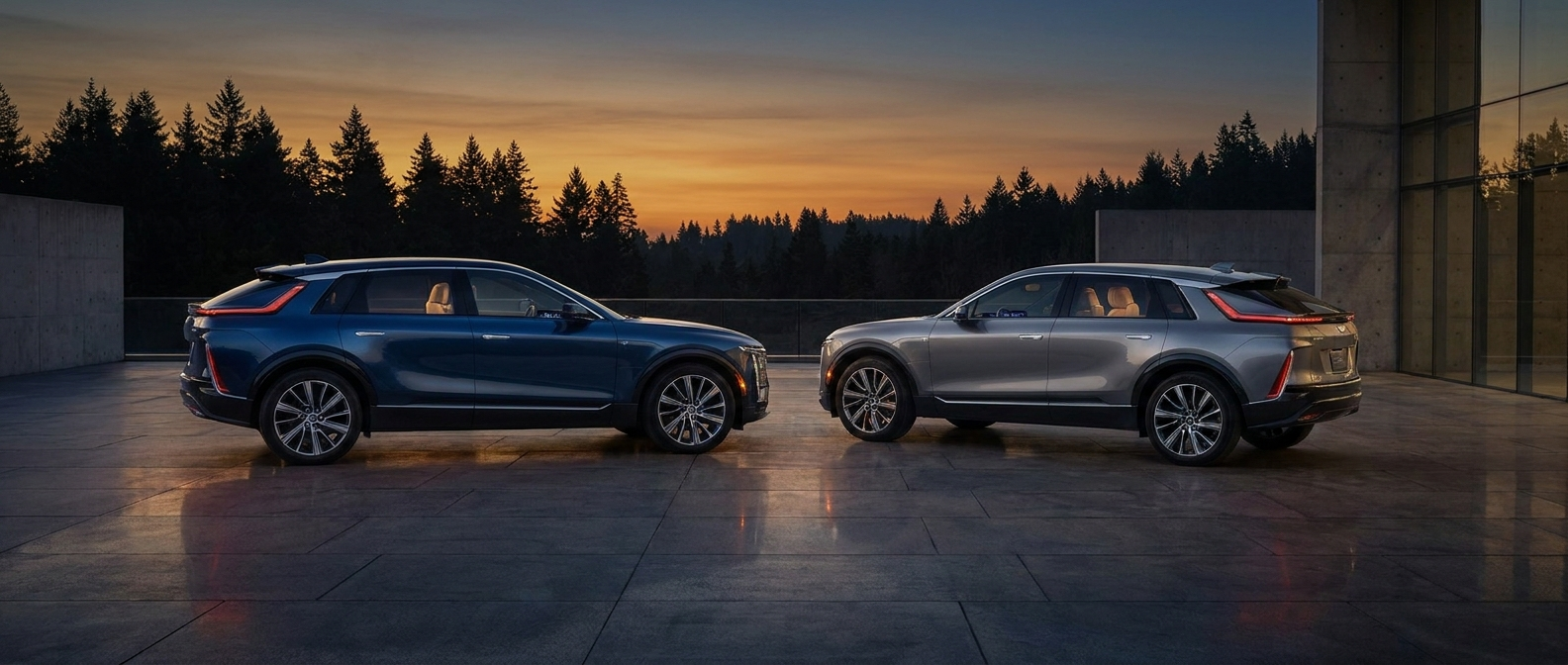
2026 Cadillac OPTIQ and 2026 Cadillac LYRIQ side by side at dusk, Ridgeland MS pine treeline in background

Cadillac OPTIQ vs. LYRIQ: Which EV Fits Your Ridgeland Daily Routine?

In this article What's the Real Difference Between These Two? Which One Handles the Real Jackson Metro Commute? Cargo, Passengers, and the Things You Haul So Which Should You Choose? Both are good cars, and we mean that without hedging. Which one fits you comes down to the shape of your life around the Jackson metro, and to two questions above the rest. What your weekends look like, and how far you roam past Ridgeland. The short version Both the 2026 OPTIQ and the 2026 LYRIQ come standard with Super Cruise hands-free driver assistance and Cadillac's 33-inch Horizon Display, the technology gap between them is essentially zero. The OPTIQ's EPA-estimated 317 miles of range (RWD) handles the Jackson metro commute with authority; the LYRIQ's EPA-estimated 326 miles (RWD) and faster 190-kW DC charging make it the choice for frequent long highway runs. The LYRIQ tows up to 3,500 lbs when properly equipped; the OPTIQ tops out at 1,500 lbs, a decisive number if weekends involve a boat ramp or a cargo trailer. The OPTIQ is notably more efficient: the EPA rates it at 117 MPGe city versus 95 MPGe city for the LYRIQ. Meaningful in a Mississippi summer when the cabin cooling never really stops. If you drive solo or as a couple and your life is centered on Ridgeland, Madison, and I-55 to Jackson, the OPTIQ earns its keep. If you need passenger room, towing muscle, or the confidence of a larger range buffer on longer runs, choose the LYRIQ. What's the Real Difference Between These Two? They share far more than they split, riding the same GM Ultium platform, wearing the same 33-inch diagonal Horizon Display, coming standard with Super Cruise active hands-free driver assistance on compatible mapped roads, and seating five in a cabin that reads instantly as Cadillac. The differences here are proportional, not philosophical. Specification 2026 OPTIQ (RWD) 2026 LYRIQ (RWD) EPA-est. Range 317 mi 326 mi Battery 85 kWh 102 kWh Horsepower (RWD) 315 hp 365 hp City Efficiency 117 MPGe 95 MPGe DC Fast Charge Rate 150 kW 190 kW Cargo (seats up) 26 cu. ft. 28 cu. ft. Max Cargo (folded) 57 cu. ft. 60.8 cu. ft. Max Towing (equipped) 1,500 lbs 3,500 lbs Front Legroom 41.6 in 44.3 in Super Cruise Standard Standard 33-in Horizon Display Standard Standard The LYRIQ is the longer car (196.7 inches versus 189.8 inches), and those seven inches carry straight through the cabin. The EPA rates it at 105.1 cubic feet of interior volume against the OPTIQ's 101.0. You'll feel it most in the rear legroom, 39.6 inches versus 37.8, on a drive to Memphis with passengers who didn't sign up to fold themselves in. The single most important number in this comparison is the towing rating: 3,500 lbs for the LYRIQ versus 1,500 lbs for the OPTIQ. If a boat, trailer, or anything approaching two tons is part of your life, that number closes the conversation. Which One Handles the Real Jackson Metro Commute? The OPTIQ makes the stronger case for straight commuting, and we'll say why without ceremony, because for the physician at Baptist Medical Center, the attorney running to the Capitol, or the executive working the Ridgeland-to-Flowood-to-Madison triangle every day, the EPA-estimated 317-mile range of the 2026 OPTIQ is more than a full workweek of driving will ever ask for. Efficiency is the number worth sitting with. The EPA rates the OPTIQ RWD at 117 MPGe in the city against 95 MPGe for the LYRIQ RWD. In a Mississippi summer, and ours runs April into October rather than June through August, the air conditioning almost never switches off. EV efficiency falls when the cabin cooling works hard, and the thriftier car gives up less range to that load. So the OPTIQ's higher city MPGe rating buys a quieter cushion on hot days than the bare numbers let on. What about charging away from home? The 2026 OPTIQ ships with a native NACS (North American Charging Standard) port, which hands it built-in access to the Tesla Supercharger network without an adapter, while the 2026 LYRIQ uses a CCS1 port that stays capable and fast but needs a NACS adapter to reach a Supercharger. On a run up I-55 toward Memphis or down toward the Coast, where charging infrastructure is still filling in, that distinction is worth knowing before you choose. Charging note: The OPTIQ peaks at 150 kW on a DC fast charger, adding up to 81 miles of range in about 10 minutes per Cadillac's figures. The LYRIQ peaks at 190 kW and adds up to 86 miles in that same window. Charge at home overnight for a daily commute and neither figure will change your week. On a road trip it does, since the LYRIQ claws range back faster between stops. Explore Financing Options Cargo, Passengers, and the Things You Haul The LYRIQ holds a cargo edge here, though a bounded one, and with every seat in place it carries 28 cubic feet behind the rear row against the OPTIQ's 26, a margin of two cubic feet you won't register on a grocery run or a weekend bag. It starts to matter when you load for a family trip. Golf bags, luggage, the cooler, and the LYRIQ's 60.8-cubic-foot maximum (versus the OPTIQ's 57 cubic feet with the rear seats folded) gives you a more composed load floor. Rear legroom is the other separator. The LYRIQ offers 39.6 inches to the OPTIQ's 37.8 inches. That gap reads small on paper. It stops reading small when the people back there are adults on a two-hour drive. If you regularly carry clients, colleagues, or family who deserve to arrive comfortable, the LYRIQ's cabin makes an argument the spec sheet can't fully carry. Towing is where the gap turns decisive. Equipped for it, the LYRIQ AWD is rated to tow up to 3,500 pounds by Cadillac, while the OPTIQ, equipped the same way, is rated at 1,500 pounds. Those two numbers separate a fishing boat on a trailer from a loaded utility trailer you'd drag to a job site. The OPTIQ won't tow a boat, full stop. So Which Should You Choose? Here's our verdict, and we won't stage it as a tie, because the OPTIQ is the right car for a large share of the professional households we see around Ridgeland and Madison, compact enough for the parking structures downtown and in the medical district, efficient enough that a Mississippi summer barely dents its daily range, and luxurious without asking you to wrestle a big vehicle through tight quarters. The LYRIQ earns the step up under a handful of conditions. You frequently carry three or four adult passengers. You pull a boat, camper, or trailer of any kind. You make regular long-distance runs to Memphis, New Orleans, or the Gulf Coast and want both the range buffer and the faster DC charging rate to keep stops short. Or you simply want the larger vehicle and the composed ride that comes with it. Our team's watched buyers make this call both ways, and neither choice is wrong. The mistake is treating one as the compromise and the other as the upgrade. They're different tools, not different tiers. Browse our current EV inventory Let's talk through the ownership structure that makes sense for your situation. By the Cadillac of Jackson Team | November 2026 Frequently Asked Questions Does the 2026 Cadillac OPTIQ have Super Cruise? Yes. Super Cruise hands-free driver assistance is standard on the 2026 OPTIQ across its full trim range. It operates on the same compatible mapped road network as the LYRIQ, and the technology suite, including the 33-inch Horizon Display, is essentially identical between the two models. Can the 2026 Cadillac LYRIQ tow a boat? When properly equipped with the AWD powertrain, the 2026 LYRIQ is rated by Cadillac to tow up to 3,500 pounds. That covers most recreational boats and personal watercraft on a standard trailer. The OPTIQ's rated at 1,500 pounds maximum when properly equipped, which handles light utility loads but is not suited for a typical boat and trailer combination common in this region. talk to our finance team Cadillac of Jackson 700 Adcock St, Ridgeland, MS 39157 (601) 948-5183